
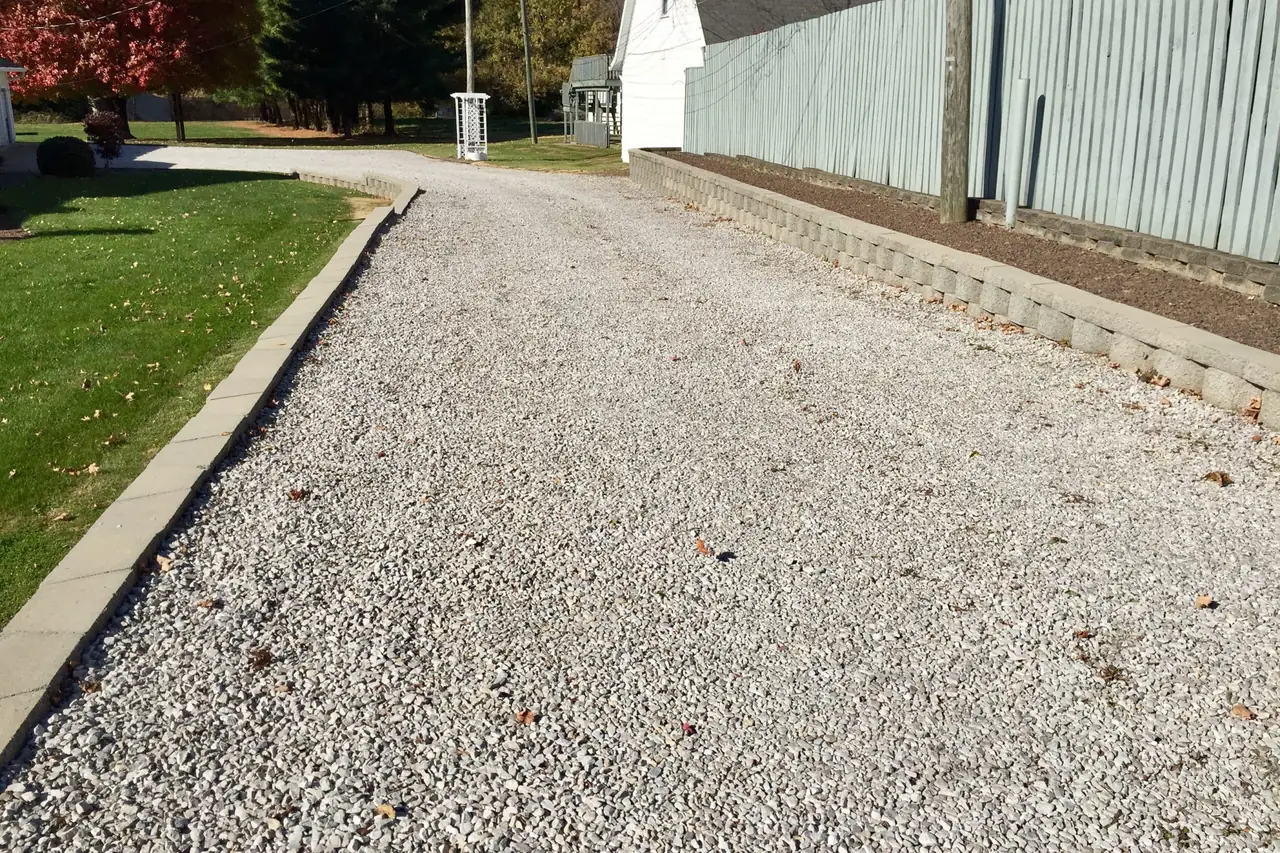
Crushed concrete vs limestone: which is better for a Louisiana driveway?
For a driveway base, crushed concrete holds its own against limestone. The Federal Highway Administration (FHWA) rates its bearing strength as comparable to crushed limestone. HomeGuide’s national cost guide lists it among the cheapest stones. Next to bare aluminum or galvanized pipe, or beside water, limestone wins because crushed concrete is strongly alkaline.
We produce recycled crushed concrete and deliver it by the dump truck load. Our crushed concrete delivery page covers its uses and how ordering works. We also build gravel and limestone driveways, so we work with both.
Where do limestone and crushed concrete come from in Louisiana?
Louisiana mines very little stone. A 2011 U.S. Geological Survey (USGS) report says the state’s deep sediments are sand, silt, clay and organic matter. None of it can be used as aggregate in its natural state. So the state imports almost all of its aggregate.
Most of it arrives by barge from Arkansas, Illinois, Kentucky and Missouri, or by freighter from Mexico. A 2011 base course study by the Louisiana Transportation Research Center used a 610 limestone from Kentucky as its reference. It also tested a 610 from Mexico.
Crushed concrete starts from old concrete instead. FHWA notes that aggregate, the stone and sand in the mix, makes up about 60 to 75 percent of the volume of concrete. Crushed back down, it serves as a granular aggregate for base and trench backfill.
What are 610 and 57 limestone?
Both are crushed limestone, and both are sold on the Northshore. 610 limestone has stones up to 1 inch, mixed with fines that help it compact. It is sold for road bases, driveways and foundation underlayment. 57 limestone is a 3/4 inch crushed limestone, sold for driveways, walkways, drainage systems and base layers.
In the 610 vs 57 limestone choice, the fines set 610 apart and help it pack into a firm base. Both grades are also sold for drainage systems. Our gravel and limestone driveways page covers the build itself.
How does limestone vs crushed concrete compare as a driveway base?
FHWA’s user guidelines put a crushed concrete base at a California Bearing Ratio (CBR) of 90 to more than 140. FHWA calls that strength comparable to crushed limestone. Crushed concrete is 100 percent crushed and angular. It locks together and transfers load well over a weak subgrade.
A 2004 FHWA review cites Texas DOT experience. A crushed concrete base tends to knit together, and recementing gives it higher load bearing capacity. Texas, Minnesota and California reported it performing better than virgin aggregate as a base.
It also yields more, with greater volume for the same weight. Coarse crushed concrete drains freely and is more permeable than conventional base, because it has fewer fines. HomeGuide adds that recycled concrete aggregate lasts as long as natural stone.
| Factor | Recycled crushed concrete | Crushed limestone (610 or 57) |
|---|---|---|
| National price per ton (HomeGuide) | $11 to $53 | $30 to $38 |
| National price per cubic yard (HomeGuide) | $16 to $75 | $35 to $54 |
| Base strength (FHWA) | CBR of 90 to more than 140 | Comparable, per FHWA |
| Volume per ton (FHWA) | More volume for the same weight | Less volume for the same weight |
| Compaction | Compact it saturated; do not overwork it (FHWA) | 610 carries fines that help it compact |
| Drainage | Coarse crushed concrete drains freely (FHWA) | 610 and 57 are both sold for drainage systems |
| Next to bare metal pipe or open water | pH often exceeds 11 in water; keep it off bare aluminum or galvanized pipe (FHWA) | The better pick |
Those are national ranges. We quote by the load once we hear what the job needs.
When is limestone the better pick?
Crushed concrete is strongly alkaline. In water its pH often exceeds 11. FHWA warns that this can corrode aluminum or galvanized steel pipe in direct contact with wet crushed concrete. Next to bare aluminum or galvanized pipe, bed the pipe in limestone instead.
The runoff is alkaline too, so some jurisdictions require crushed concrete stockpiles to sit a minimum distance from water courses. FHWA reports no apparent environmental problems with crushed concrete leachate. Right beside a pond or open water, limestone sidesteps that question.
Ask for clean crushed concrete. Above 20 to 25 percent asphalt coated pieces, FHWA found bearing strength falls below a natural aggregate base. A crushed concrete base should also be compacted saturated and shaped as little as possible, since overworking segregates it.
Does the parish treat them the same under a culvert?
For the base under a driveway culvert, yes. St. Tammany Parish’s culvert requirements, dated June 2025, cover driveway culverts in the parish right of way. They ask for the base under the pipe and its depth, preferably 6 inches of crushed stone or crushed concrete. Limestone counts as crushed stone, so both fit.
The pipe must be a type the state transportation department (LADOTD) approves. A metal culvert must be bituminous coated. Inside a city such as Covington, the city’s own right of way permit applies instead. Confirm which rules cover your lot, and we will work through the paperwork with you on a driveway culvert installation.
What is the best gravel for a driveway on the Northshore?
NOAA’s 1991 to 2020 normals put Covington at 62.51 inches of rain a year. USDA describes the Abita soils of St. Tammany’s terraces as somewhat poorly drained and slowly permeable. From December through April, their seasonal high water table sits 1 to 3 feet down.
On ground like that, the base carries the drive. HomeGuide gives 5 to 6 inches as the minimum recommended depth for a gravel driveway, installed in layers. Most installations use a 3 to 4 inch base layer of crusher run or crushed stone. A 2 to 3 inch top layer goes over it.
A crown sheds the rain. FHWA’s gravel roads guide recommends a surface that rises about 1/2 inch per foot, or about 4 percent. Cutting that crown is part of our grading and dirt work, and we can spread and grade what we deliver.
Where each wins:
- Base layer: crushed concrete or 610 limestone. Crushed concrete tests about as strong and goes further per ton.
- Top layer: your call. 610 and 57 are both sold for driveways, and a crushed concrete base can sit under a limestone top.
- Drainage spots: coarse crushed concrete drains freely, and 610 and 57 are both sold for drainage systems.
- Next to bare aluminum or galvanized pipe, a pond or open water: limestone.
How much crushed concrete or limestone do you need?
Multiply length by width by depth in feet, then divide by 27 to get cubic yards. A 10 by 100 foot drive at 4 inches deep comes to about 12.3 cubic yards. At 6 inches it comes to about 18.5 cubic yards.
HomeGuide says a 10 wheel dump truck carries around 8 to 10 yards of gravel. So the 6 inch drive runs about 2 to 3 loads. Our own dump trucks run those loads, the same trucks behind our fill dirt delivery and hauling.
FAQ
Is crushed concrete better than limestone for a driveway?
For the base layer, crushed concrete is about as strong as limestone. FHWA rates its bearing strength as comparable to crushed limestone, and HomeGuide lists it among the cheapest stones. Limestone is the better pick next to bare aluminum or galvanized pipe, or right beside water. Crushed concrete is strongly alkaline.
What is 610 limestone?
610 limestone is crushed limestone with stones up to 1 inch, plus fines that help it compact. It is sold on the Northshore for road bases, driveways and foundation underlayment. A 2011 study by the state’s road research center used a 610 from Kentucky as its reference material.
What is the difference between 610 and 57 limestone?
610 limestone runs up to 1 inch with fines for compaction, and 57 limestone is a 3/4 inch stone. 610 is sold for road bases, driveways and foundation underlayment. 57 is sold for driveways, walkways, drainage systems and base layers. For a firm base, the fines in 610 help.
Is crushed concrete cheaper than limestone?
Often, going by HomeGuide’s national prices: crushed concrete runs $11 to $53 per ton, and crushed limestone $30 to $38. The crushed concrete range starts lower but tops out higher, so compare real quotes. FHWA adds that a ton of crushed concrete covers more volume. We quote by the load after we hear about the job.
Is crushed concrete bad for ponds or pipes?
It needs care near both, because its pH in water often exceeds 11. FHWA warns that can corrode aluminum or galvanized steel pipe it touches when wet. FHWA reports no apparent environmental problems with its leachate, but some jurisdictions keep stockpiles back from water courses. Next to bare aluminum or galvanized pipe, or open water, use limestone.
How much crushed concrete or limestone do I need for a driveway?
A 10 by 100 foot drive needs about 12.3 cubic yards at 4 inches deep, or 18.5 at 6 inches. HomeGuide says a 10 wheel dump truck carries around 8 to 10 yards of gravel. So the 6 inch drive is about 2 to 3 loads. Tell us the length, width and depth, and we will figure the loads.
What should you tell us before we quote?
Tell us the length and width of the drive and what it will carry. Mention any metal pipe or water close by. We match the material to the job and quote by the load after we hear about it.
W2 Commercial Construction is a Louisiana State Licensed Contractor, LA State Lic# 78829, and fully insured. We have worked Northshore ground for more than 20 years. Ask for a free estimate on our crushed concrete page.